
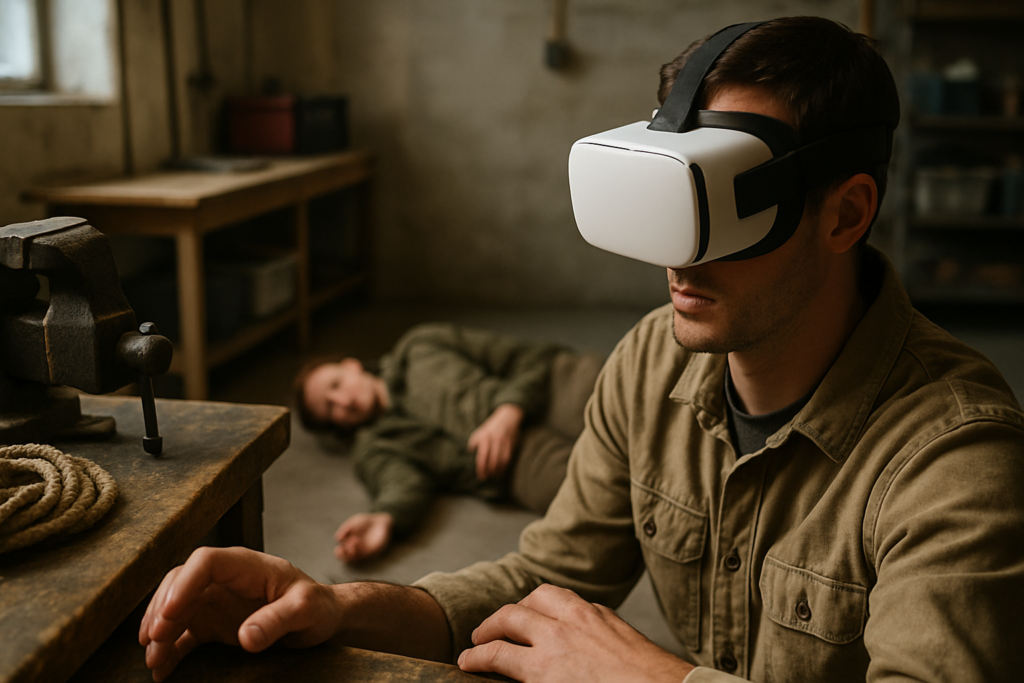
Why VR Works for Real World Survival
Modern survival training requires more than memorizing techniques it demands practical, repeatable, high pressure experience. This is where virtual reality (VR) steps in as a game changer.
Realistic Stress Exposure Without the Risk
Survival is as much mental as it is physical. VR offers immersive environments that realistically simulate high stress scenarios like getting lost in a snowstorm or responding to a bear attack all without placing the learner in actual danger.
Scenarios mimic real threats in visually detailed, reactive settings
Trainees experience urgency and adrenaline without actual harm
Instructors can scale intensity based on user progression
A Safe Space for Critical Decision Making
In real survival situations, a single mistake can be costly. With VR, trainees can test choices, learn from errors, and build instincts in a consequence free setting.
Allows trial and error without fear of injury or failure
Enhances decision making by exposing users to branching outcomes
Reinforces judgment under pressure
Accelerated Muscle Memory and Physical Familiarity
Survival isn’t learned passively. Through VR’s full body engagement, learners train their reflexes and fine motor responses more directly than with traditional methods.
Haptic feedback and simulated movement improve muscle memory
Encourages active rather than passive skill acquisition
Bridges the gap between theory and physical practice
Virtual reality doesn’t just replicate the wilderness it prepares the mind and body to navigate it.
Core Applications in Survival Training
Forget theory. The value of virtual survival training lies in doing and doing again until it sticks. Some of the most critical skills for real world survival are now being honed inside headsets, and the results are getting serious attention.
First up: wilderness navigation and orientation. VR modules drop users into remote forests, deserts, even mountain passes. Training focuses on map reading, compass work, and terrain recognition adding pressure with time limits or simulated weather shifts. Learners build spatial awareness and dead reckoning instincts through repetition, which is hard to replicate in a classroom or one off weekend course.
Next comes first aid response and crisis simulation. Blood, chaos, tough choices no real injuries, just triggered decisions that matter. Whether treating a broken leg mid hike or learning triage in a flooding canyon, VR drills the basics of how to stay calm and act. Muscle memory kicks in when it’s needed most.
Finally, there’s emergency shelter building and fire starting. Not the romantic kind. The freezing, time’s running out kind. Learners practice building wind resistant lean tos, locating dry fuel, and mastering flame ignition with limited tools. Over and over. The kind of repetition that turns panic into process.
Put bluntly, these skills mean the difference between surviving and being rescued or not. VR doesn’t just teach them. It hardwires them.
Tactical Benefits for Learners
One of VR’s greatest survival training strengths is repeatability. You can run the same scenario over and over without restocking supplies or finding a training site. No firewood, no bandages, no tents to pack up just reset and go again. This kind of frictionless repetition accelerates learning in a way that real world conditions often can’t.
VR also gives you instant feedback. Everything from your reaction time to your decision making under pressure can be tracked and replayed. Did you freeze too long before applying pressure to that wound? Did you choose the wrong escape route? You’ll know, and you’ll fix it next time.
That clarity builds confidence. The more you train in these tension controlled environments, the more calm and capable you become when it counts. You start to develop instincts. You stop guessing. VR helps close the gap between simulation and survival no substitute for the real thing, but a damn strong rehearsal.
Training Innovation Through Virtual Survival Tools

Survival training in 2024 isn’t just about grit anymore it’s about gear, and the tech is leveling up fast. High end VR headsets now offer crisp visuals and faster response times, but it’s the haptic gear that really dials in the realism. Feel the tension of a bowstring, the kick of a wind gust, the resistance of climbing gear these physical feedback systems bring muscle memory into play like never before.
Then there’s the AI. Scenarios aren’t static PowerPoint slide simulations. They’re dynamic and responsive. One decision changes outcomes. Choose a fire starting method in a simulated snowstorm, and the AI adapts. Stray off a trail in the desert, and the sun starts punching harder. That kind of tailored stress testing builds real decision making habits.
Environments are also more targeted. Whether you’re prepping for arctic expeditions, desert survival, or navigating dense jungle terrain, there’s a module for it. No need to fly across the world you can train for multiple threat zones from one place.
Want to dig deeper into the tools changing how survival is taught? Explore more: virtual survival tools
Transforming Instructor Roles
Instructors aren’t walking side by side with trainees anymore not physically, anyway. VR is reshaping what it means to train someone. Instead of leading outdoor drills, today’s survival experts are logging in as remote evaluators, tweaking scenarios in real time and monitoring responses from anywhere. They’re not obsolete they’re just operating at a higher level, designing tougher, smarter, and more personalized experiences.
One of the biggest advantages? Data. Every decision a trainee makes, every hesitation, every shortcut it’s all tracked. Trainers can pull insights to identify gaps, strengths, and habits. This opens the door to skill plans that actually fit the individual, not just a generic checklist.
It also scales. Solo learner in a studio apartment? Ten person search and rescue team prepping for a wilderness op? Doesn’t matter. These programs flex to fit the need, whether it’s one on one feedback or group coordination exercises inside a digital forest. The result is more reps, better coaching, and stronger readiness across the board.
The Road Ahead
VR survival training is no longer stuck in a lab or locked behind elite programs. In 2024, we’re seeing real integration with live GPS systems, allowing learners to move through virtual environments that mirror real world terrain. This matters. When your location in the training module syncs in real time with your actual movement, it’s not just a simulation it’s muscle memory being built under pressure.
Stress testing is also going live, literally. Systems now track cognition, heart rate, and reaction time to ramp up difficulty mid scenario. If your vitals spike, so does the challenge. That’s not a gimmick it’s how you train for survival when calm thinking under stress means everything.
Behind the scenes, military units and disaster response teams are getting involved. They’re feeding in real world intel, helping shape scenarios based on actual mission feedback. Fire zones, earthquake collapse zones, hostile combat navigation these aren’t just theory anymore. Civilians and professionals alike are now drilling in reconstructions shaped by those on the ground.
And here’s the quiet revolution: cost. Entry barriers are dropping. With consumer headsets becoming cheaper and dev platforms offering modular content, access is opening up to schools, volunteer orgs, and solo preppers alike.
Want to go deeper? Check out this detailed breakdown on virtual survival tools.
Final Notes: Rep After Rep Builds Readiness
Survival Is a Skill, Not a Concept
Survival isn’t just something you read about it’s something you do. In unpredictable, high stakes environments, theoretical knowledge is only the beginning. What truly matters is how instinctively and effectively you can apply what you’ve learned when it counts.
Real world survival relies on practiced reaction, not just understanding
Decision making speed and adaptability are key
VR’s Core Strength: Repeatable, Realistic Practice
Virtual Reality isn’t a shortcut it’s a pathway to deeper readiness. Its true advantage lies in the ability to simulate complex scenarios over and over, until responses become second nature.
High fidelity environments increase realism and retention
Controlled repetition builds muscle memory faster than traditional methods
Learners can safely push limits and test responses across a variety of situations
Train Like There’s No Second Chance
In real life survival, you don’t get to rewind. That’s the principle VR training is built on. The space may be virtual, but the pressure, choices, and consequences are designed to mirror the real thing.
Helps develop confidence in life or death judgment calls
Allows integrative learning without life threatening stakes
Ensures you’re ready long before you ever have to be
When the wilderness gives no second chances, your training has to be ahead of the curve and VR gives you that edge.
 Eugenia Phillips plays a pivotal role in the development of Terra Tactician Tactics, bringing her expertise and enthusiasm for the outdoors to the platform. With a strong background in environmental studies and a passion for adventure, Eugenia is dedicated to crafting content that resonates with both novice and seasoned outdoor enthusiasts. She focuses on creating comprehensive guides and articles that offer practical tips, safety advice, and innovative ideas for those looking to explore nature responsibly and confidently. Her attention to detail and commitment to delivering valuable information have made her an invaluable asset to the project.
Eugenia's contributions extend beyond content creation; she is deeply involved in shaping the platform's mission to foster a community of like-minded adventurers. Her collaborative spirit and love for the outdoors drive her to constantly seek new ways to enhance the site's offerings. Whether she is sharing her experiences from a recent hike or conducting research on the latest survival gear, Eugenia's work is infused with a genuine desire to help others enjoy and appreciate the natural world. Her passion for the project is evident in every article she writes, making her a cornerstone of the Terra Tactician Tactics team.
Eugenia Phillips plays a pivotal role in the development of Terra Tactician Tactics, bringing her expertise and enthusiasm for the outdoors to the platform. With a strong background in environmental studies and a passion for adventure, Eugenia is dedicated to crafting content that resonates with both novice and seasoned outdoor enthusiasts. She focuses on creating comprehensive guides and articles that offer practical tips, safety advice, and innovative ideas for those looking to explore nature responsibly and confidently. Her attention to detail and commitment to delivering valuable information have made her an invaluable asset to the project.
Eugenia's contributions extend beyond content creation; she is deeply involved in shaping the platform's mission to foster a community of like-minded adventurers. Her collaborative spirit and love for the outdoors drive her to constantly seek new ways to enhance the site's offerings. Whether she is sharing her experiences from a recent hike or conducting research on the latest survival gear, Eugenia's work is infused with a genuine desire to help others enjoy and appreciate the natural world. Her passion for the project is evident in every article she writes, making her a cornerstone of the Terra Tactician Tactics team.